Most one on one meeting questions for managers end up bookmarked and forgotten — because a list of 150 questions doesn't tell you which one to ask right now. These 50+ questions are sorted by the situation you're actually in, so you can find the right one in seconds.
— Gallup
In this guide:
- 10 one on one questions every manager should know
- Weekly check-in questions — rapport, blockers, momentum
- Career development questions — goals, skills, aspirations
- Goals and priorities questions — alignment, focus, planning
- Wellbeing questions — burnout, balance, support
- Performance questions — context, skills gaps, feedback
- Upward feedback questions — how you're doing as a manager
- Team dynamics questions — culture, friction, hidden problems
- How to ask without it feeling scripted
- What makes a great vs. terrible question
- Suggested meeting cadence
- FAQ
10 One on One Meeting Questions Every Manager Should Know
Pressed for time? Start with these 10 one on one meeting questions for managers. They cover the essentials — rapport, blockers, growth, wellbeing, and upward feedback — and work across almost any meeting context.
| # | Question | Purpose |
|---|---|---|
| 1 | What's been the highlight of your week? | Rapport |
| 2 | What's the biggest challenge you're facing right now? | Blockers |
| 3 | What will stop you from hitting your objectives? | Planning |
| 4 | What skills will you need in the future that you don't have yet? | Growth |
| 5 | Is anything at work keeping you awake at night? | Wellbeing |
| 6 | What's one good piece of feedback and one bad piece you'd give me? | Upward feedback |
| 7 | What do you wish you could change about our team culture? | Team |
| 8 | Who are the people you'd most like to learn from? | Development |
| 9 | Do you feel you have the skills you need for what's being asked of you? | Performance |
| 10 | How can I support you more? | Coaching |
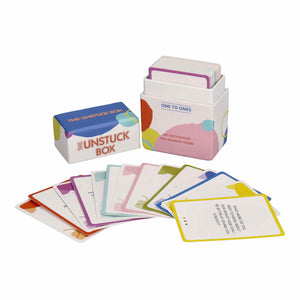
These questions come from our One to Ones and Performance Improvement card decks — 200+ conversation cards for work, developed with real managers, organized by color-coded category so you can grab the right one without scrolling through your phone mid-meeting. Top tip - use a meeting template to track what you're asking!
Why Most One-on-One Question Lists Don't Work
Psychologist Barry Schwartz called it the paradox of choice: when options multiply, decision-making stalls. A list of 150 questions isn't a tool — it's a menu at a restaurant with too many pages. You order the same thing every time.
There's also the screen problem. Having questions on your phone during a one on one creates a barrier. Your direct report sees you looking at a device and assumes you're distracted — even if you're preparing a better question. The intent is good. The signal is bad.
What actually works is matching the question to the moment. Fewer questions. Better timing.
Below are one on one meeting questions managers can use with direct reports, grouped by the situation you're walking into.
50+ One on One Questions to Ask Employees, Sorted by Situation
Weekly Pulse Check
These manager one on one questions are your bread-and-butter openers — designed to surface what matters without turning the meeting into a status report.
- What's been great over the past week?
- What's on the to-do list for next week?
- How productive do you think you've been lately?
- How can we take the team to a new level this week?
- What should we stop doing? What should we start doing?
- What emoji would you use to describe your week since our last meeting?
- How can we work better as a team over the next week?
If you're looking for a structure around these check-ins, our guide to effective one-on-one meetings covers the six elements most managers miss.
Career and Growth
Career development conversations are the ones most managers know they should have and most consistently avoid. They feel big. They don't need to be. They require a question and genuine curiosity about the answer.
Tell your direct report the meeting is explicitly about growth so they come prepared. Then try these one on one questions with employees:
- What's your career goal in five years? And ten?
- What skills will you need in the future that you don't have yet?
- Who are the people you'd most like to learn from — inside or outside this company?
- What projects would you like to be more involved with?
- Where do you need help to develop further?
- What's a big, hairy, audacious goal you'd set for yourself if you knew you couldn't fail?
- In terms of learning and growth, how can I help you more?
- What excites and motivates you most about a project?
- Is this job what you expected when you took it?
Goals and Priorities
Misalignment on goals is one of the most common — and most invisible — drains on team performance. People are working hard, but on subtly different priorities. These questions for one on ones with direct reports surface those gaps before they become problems.
- Which of your objectives or goals do you think can bring the most value right now?
- What will stop you from hitting your objectives?
- If this project is a huge success, what would that look like to you?
- What are your "known unknowns"?
- How do these goals align with your broader career aspirations?
- How can we break these goals into smaller, trackable steps?
- What resources or support do you need that you don't currently have?
- What most excites you about the work you're doing right now?
The best one-on-one questions look both directions — backward for context, forward for growth.
Wellbeing and Engagement
You know the signs. Shorter emails. Less energy in meetings. Fewer questions asked. Something's off but nobody's named it. These questions give your direct report a low-risk way in — specific enough to signal that you've noticed, open enough that they control how much they share.
- How are you doing — honestly?
- Is anything at work keeping you awake at night?
- Are there points during the day where you feel like you're drowning? If so, what are they?
- What do you do to make sure you're not burning out?
- How's your work-life balance? What could we change?
- Is there anything you'd like to share that you couldn't or haven't in other meeting settings?
- Can you recall a time recently when you felt particularly motivated? What was different about that?
- Am I, and the organization, supporting you the way you need?
Related reading: why cancelling one-on-ones is so damaging to employees. When someone is struggling, the 1:1 is often the only space where they'll say so.
Performance Improvement
Performance conversations are where managers earn their keep — and where most feel least prepared. The instinct is to focus on what went wrong. The better move is to understand why it went wrong, which means asking questions that explore context, not just outcomes.
- Is there anything in the work environment that's hindering your performance?
- Do you feel you have the skills you need for what's being asked of you?
- Do you understand how your work contributes to our larger goals?
- Are there aspects of your job that you find demotivating?
- Do you feel connected to and supported by your team?
- Do you receive enough feedback? Is it the right kind?
- What challenges do you anticipate in the next month — and what support would help?
- Is there anything you feel you need that you haven't asked for?
Am I focusing on a recent dip and ignoring a longer track record?
Am I attributing this to their character when external factors might be at play?
Am I being influenced by someone else's opinion of this person?
These are the exact bias-check questions built into our Performance Improvement card deck — 10 cognitive biases managers commonly fall into, each framed as a self-reflection prompt.
Upward Feedback
This is the section most managers skip. It's also the one that builds the most trust over time.
Asking for upward feedback puts you in a vulnerable position. That's the point. When your direct reports see you genuinely inviting criticism — and responding without defensiveness — they become more honest across the board.
- What's one good piece of feedback and one bad piece you'd give me?
- Is there anything I do as your manager that slows you down?
- Are you happy with how we communicate — should it be more, less, or different?
- How could I be more like the manager you've always wished for?
- What are the things everyone around me doesn't tell me?
- What should I do less of? What should I do more of?
- How can I support you more?
- What more do you need to know about our goals? How can I be better at giving you context?
When your direct reports see you genuinely inviting criticism — and responding without defensiveness — they become more honest across the board.
Team Dynamics
One on one meetings aren't just about the individual. They're one of the few spaces where you can learn what's really happening on the team — the dynamics, the friction, the unspoken frustrations that never surface in group settings.
- What's the biggest challenge facing this team right now?
- Who's knocking it out of the park — and why?
- What problems exist on this team that I don't know about?
- What do you wish you could change about our team culture?
- What's one thing we could do to improve team performance?
- What's stopping this team from succeeding?
- How can we communicate better as a team?
- Are there things I should explain that not everybody on the team understands?
How to Ask One-on-One Questions Without Making It Weird
You now have 50+ questions. Here's the part nobody else tells you: how you ask matters more than what you ask.
If you want a broader method for opening the conversation before choosing the exact prompt, see our guide to leadership conversation starters for one-on-ones.
Reading a question off a screen mid-conversation signals something you don't intend. It says I didn't think about this before we sat down. Even if that's not true, the laptop between you tells a different story.
This is one reason we built our One to Ones card deck as a physical product. Drawing a card from a deck changes the dynamic in a way that reading from a screen never does. Both people see the question at the same time. There's an element of surprise — neither of you knows what's coming. It removes the power imbalance of one person controlling the agenda and replaces the awkwardness of scrolling with a shared moment.
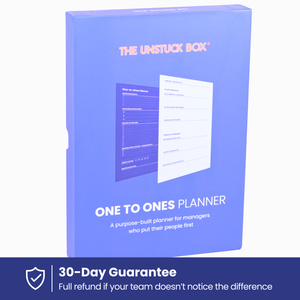
Pair it with the One to Ones Planner, and you've got somewhere to capture follow-ups, track themes, and build continuity between meetings — the thing that separates managers who ask from managers who listen.
What Makes a Great One-on-One Question (And What Makes a Terrible One)
Not all questions are equal. Here's a quick framework:
Open, not closed. "How are you?" invites "Fine." Compare: "What's been the highlight of your week?" — that invites a story.
Forward-looking, not just backward. "What happened?" is useful for context. "What would you do differently?" is useful for growth.
Specific, not vague. "Any feedback for me?" gets nothing. "What's one thing I do that slows you down?" gets a real answer. Specificity lowers the social risk of responding honestly.
Empowering, not leading. "Don't you think we should change the process?" isn't a question — it's an instruction wearing a question mark. Save questions for things you're genuinely curious about.
| Weak Question | Stronger Alternative |
|---|---|
| "How's everything going?" | "What's been the highlight of your week — and what's been the hardest part?" |
| "Any blockers?" | "What will stop you from hitting your objectives this month?" |
| "Do you like your job?" | "If you could change one thing about your role tomorrow, what would it be?" |
| "Any feedback?" | "What should I do less of — and what should I do more of?" |
The pattern: make it easier for someone to give you a real answer.
How Often Should You Ask These Questions?
Use these one on one questions with employees in weekly, biweekly, or monthly meetings — depending on what you need to cover.
| Frequency | Duration | Best for | Draw from |
|---|---|---|---|
| Weekly | 15–30 min | Check-ins, blockers, team pulse | Weekly pulse + team dynamics |
| Biweekly | 30–45 min | Performance, goals, deeper check-ins | Goals & priorities + performance |
| Monthly | 45–60 min | Career growth, manager feedback | Career development + upward feedback |
The weekly check-in is the backbone — it's short, consistent, and builds the trust that makes the monthly career conversation possible. Skip the weekly meetings and you'll find the monthly ones feel forced. Google's Project Oxygen research confirmed what most good managers already sense: frequent, quality conversations are the single most important thing a manager does.
For a deeper look at structuring one on one meetings beyond the questions — preparation, agenda, follow-up — see our complete guide to effective one-on-one meetings.
The Only Question That Really Matters
The question that gets your direct report to tell you something real matters less than you think. What matters is that you asked it with genuine curiosity, you listened without planning your response, and you'll follow up on it next time.
That's what turns a one-on-one from a calendar obligation into the most valuable 30 minutes of your week.
Our physical card decks put the right question on the table — literally. No screens, no scrolling, no awkward pauses while you search for inspiration.
All three available together in the Manager's Bundle.
Or start with the 10 questions at the top of this page and see what happens in your next meeting.
Frequently Asked Questions
What questions should I ask in a one-on-one meeting with my direct report?
Start with open-ended questions that match the situation. For a weekly check-in, try "What's been great over the past week?" or "What's the biggest challenge you're facing right now?" For deeper conversations, try career and growth questions like "What skills will you need in the future?" See the full list sorted by situation above.
How many questions should I prepare for a one-on-one?
One to three is plenty. One good question can fuel an entire 30-minute conversation. Preparing too many turns the meeting into an interview. Pick one from the relevant situation category, ask it, and let the conversation go where it needs to.
How do I make one-on-one meetings less awkward?
Stop reading questions from a screen — it creates a barrier. Prepare one or two questions before the meeting, or use a physical tool like a card deck so both of you see the question at the same time. Match your energy to theirs, and let silence do its work after you ask.
What should be discussed in a 1-to-1 meeting?
It depends on the cadence. Weekly meetings should cover blockers, wins, and near-term priorities. Biweekly meetings can go deeper into goals and performance. Monthly meetings are best for career development and upward feedback. See our suggested cadence table for a practical framework.
How often should managers have one-on-one meetings?
Research from Gallup shows that employees whose managers hold regular meetings are almost three times as likely to be engaged. Weekly 15–30 minute check-ins are the standard. Supplement with longer monthly conversations for career development and feedback.
Want a ready-made meeting structure to go with these questions? See our free one-on-one meeting template — five formats, including printable options.