Does your team hate icebreakers? If every team meeting starts with "Let's go around and share a fun fact," the problem is not the idea of an icebreaker. The problem is that most workplace icebreakers feel like they were written for a school camp, not a room full of adults, most with deadlines to meet and families to get home to.
A good team-meeting icebreaker does one simple job: it gets people talking and eases the atmosphere in a meeting, without making anyone work too hard for it. It should feel light, not dragged out, and it should never push people into oversharing or performing a personality.
Below, you'll find 10 quick-start questions, a full set of 50 sorted by meeting type, when to skip the icebreaker altogether, how to keep it from getting weird, and what to use if you want more structure than one question.
(If you want a reusable version of the key parts of this post, not just a browser tab full of prompts, our guide to conversation cards for work shows how teams use structured prompts across standups, onboarding, offsites, and check-ins.)

Pressed for Time? Start with These 10
If you only need one question for tomorrow's meeting, start here.
-
What's one small win worth mentioning before we dive in?
-
What feels clear this week, and what still feels fuzzy?
-
What's one thing you could use help with earlier rather than later?
-
What would make this meeting worth your time?
-
What's an assumption we should test before it becomes a problem?
-
What's something people usually misunderstand about how you work?
-
What meeting habit makes remote calls better for you?
-
What feels noisy, confusing, or half-finished right now?
-
What are we overcomplicating?
-
What's one thing the team should know before we start solving things?
Use one question, not five. The goal is not to "do an icebreaker." The goal is to make the first useful contribution easier.
What Makes a Good Icebreaker Question for a Work Meeting?
The best icebreaker questions for team meetings have four qualities.
1. They are easy to answer without sounding fake
"What superpower would you choose?" makes some people play along and the rest of the room check out. "What feels clear this week, and what still feels fuzzy?" is easier to answer honestly.
2. They fit the meeting you're actually having
A project kickoff needs a different opener than a Monday huddle. A remote check-in needs a different opener than an onboarding session. Good questions match the job the room is trying to do.
3. They do not punish quiet people
Some people need two beats before they speak. A good opener gives them an easy entry point. A bad one rewards whoever is quickest, loudest, or most willing to improvise.
4. They give you something useful back
The best questions are not random entertainment. They tell you something about energy, friction, expectations, workload, or team habits. That makes the icebreaker earn its place.
If what you really want is a longer activity rather than a one-minute opener, use something built for that job. Our guide to team building card games for work teams is a better fit than stretching one question too far.
When to Skip the Icebreaker
Not every meeting needs one.
Skip it when:
-
the team is walking into bad news or real uncertainty
-
there is active tension in the room and any fake-cheerful opener will make things worse
-
the meeting is already short, urgent, and clearly focused
-
the group already has momentum and does not need warming up
-
you are using the same ritual every week
In those moments, a simple check-in is usually better than an icebreaker. Try: "Before we start, what is the main thing you need from this meeting?" That still feels human, just more honest.
For meetings that need a more purposeful opener, our leadership conversation starters guide separates light icebreakers from questions that help managers surface blockers, trust, clarity, and follow-up.
And if the issue is really one person, not the whole room, take it out of the group setting. Use one-on-one meeting questions for managers for private conversations, or move toward workplace conflict resolution for teams if tension has already surfaced.
50 Icebreaker Questions for Team Meetings, Sorted by Situation
You do not need all 50 – you just need the right one!
Quick Check-In Questions for Weekly Team Meetings
Use these when the meeting already has a clear agenda and you only need a fast opener that gets people talking.
-
What feels clear this week, and what still feels fuzzy?
-
What's one thing you could use help with earlier rather than later?
-
What took more energy than it should have last week?
-
What's one small win worth mentioning before we move on?
-
What are you hoping is true by the end of this week?
-
What's one thing on your plate that looks simple from the outside but isn't?
-
Where are you moving fast right now?
-
What's one update you can give in one sentence?
-
What is something the team should know before we start solving things?
-
What's one thing you'd like less noise around this week?
These work because they sound like work, not a warm-up exercise from somewhere else. Their only job is to get the room present.
Icebreaker Questions for Project Kickoffs and Planning Meetings
Use these when the meeting is about alignment, scope, dependencies, or deciding how the work will run.
-
If this meeting is useful, what will we leave with?
-
Where could this project get messy faster than people think?
-
What's an assumption we should test before it becomes a problem?
-
What handoff worries you most?
-
What would make this easier to execute than the last similar project?
-
What does "good enough" look like here, realistically?
-
Where do you expect ambiguity to show up first?
-
What would you rather raise now than apologize for later?
-
What is one dependency we should not treat as a footnote?
-
If this goes unusually well, what will we have done early?
These questions open the room while surfacing risk before the project gets expensive.
Icebreaker Questions for New Teams and Onboarding Meetings
Use these when people are still learning one another's rhythms, expectations, and working styles.
-
What's something people usually misunderstand about how you work?
-
What helps you settle into a new team faster?
-
What's your ideal level of context before a meeting?
-
What's a small courtesy at work that matters more to you than people expect?
-
What's the best way to pull you into a conversation if you've been quiet?
-
What makes a meeting feel useful rather than draining for you?
-
What kind of update style helps you trust that things are on track?
-
When you're stuck, do you prefer to ask early or think alone first?
-
What's one working habit you'd love teammates to know about?
-
What's something a previous teammate did that made collaboration easier?
This is where a lot of teams miss the point. Trust rarely shows up just because everyone knows each other's names. It usually starts once working preferences become visible.
Icebreaker Questions for Remote and Hybrid Team Meetings
Use these when part of the room is remote, everyone is remote, or the call needs a little warmth before the screen-sharing starts.

-
What's one thing in your setup that is saving your sanity this week?
-
What makes a remote meeting feel longer than it needs to?
-
What's one meeting habit that helps you stay present on video calls?
-
What is easier to say on chat than out loud for you?
-
What helps you feel included when some people are in the room and some aren't?
-
What's one signal that tells you a conversation should move off Slack and into a call?
-
If you could remove one annoying part of hybrid meetings, what would it be?
-
What's one thing people do on video calls that makes it easier for you to contribute?
-
What's your one-line status before we share screens?
-
When do you know a remote meeting has gone from useful to crowded?
Remote icebreakers work best when they respect the medium: keep answers short, let people answer in chat if that suits the room better, and do not confuse "everyone's on camera" with "everyone's fully arrived."
Icebreaker Questions for Low-Energy, Tense, or Post-Crunch Meetings
Use these when the room feels tired, overloaded, or slightly brittle. The goal is not fun for its own sake. It is honesty without drama.
-
What's taking more effort than it should right now?
-
What feels noisy, confusing, or half-finished at the moment?
-
What's one thing the team could make easier this week?
-
What are we overcomplicating?
-
What's a pressure point worth naming even if we cannot fix it today?
-
Where could five minutes of clarity save us five hours later?
-
What's one conversation we're overdue to have?
-
What's something you wish other people understood better about your work right now?
-
Where do you need fewer opinions and more decisions?
-
What's one thing we can stop doing that would help immediately?
These are not light, and that is the point. Some meetings need a gentle opener; others need a clean way to name the strain in the room without turning the whole agenda into group therapy.
The Icebreaker Questions That Usually Flop
Not banned forever. Just overused.
-
"If you were an animal, what would you be?"
-
"Tell us a fun fact about yourself."
-
"What superpower would you choose?"
-
"What's your spirit food?"
-
anything that sounds unrelated to why the team is in the room
There isn't anything wrong with these per se, but most adults hear them and think, "Right. We are doing this now."
If you want a better rule, use this one: ask questions people can answer in their real voice. That alone removes half the cringe.
How to Ask These Without Killing the Room
Good facilitation often matters more than the exact prompt.
Go first
If you ask the question, answer it first. Keep it short. Show the tone you want from the room.
Timebox the answers
Ten people giving sixty-second answers is ten minutes gone. Keep it tight. Twenty seconds is usually enough.
Let people pass
Not every question suits every person or every day. Giving people a graceful pass makes the room safer, not colder.
Match the opener to the room
Use a grounding question when the energy is low, a focusing question when the meeting is strategic, and a working-style question when the group is brand new. Context matters more than creativity.
Tie it back to the meeting
The opener should make the next part of the meeting easier. If it has no bridge into the agenda, it starts to feel ornamental.
One practical line you can steal:
Let's do a one-question check-in so it's easier to get everyone's voice in the room before we jump into the agenda.
That explains the point without making a big ceremony out of it.
If You Want More Structure Than One Question
Sometimes one opening question is enough. Other times, you want something you can reuse without scrolling through your phone five minutes before a meeting.
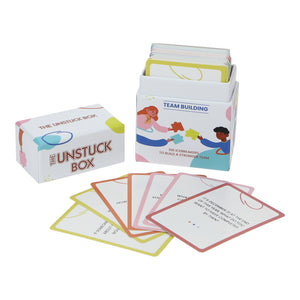
That is where team building cards help. They give you a practical prompt bank for trust-building, collaboration, and group discussion without the usual party-game energy. If you are comparing options, browse our team building products, or buy for your team if you are ordering for onboarding, offsites, or manager programs.

Frequently Asked Questions
What are good icebreaker questions for team meetings?
Good icebreaker questions for team meetings are brief, easy to answer, and relevant to the work context. The best ones help people enter the conversation without feeling childish or overly personal.
How many icebreaker questions should you ask in one meeting?
Usually one, and two at most. If the opener turns into its own segment, it starts competing with the actual meeting.
How long should a team-meeting icebreaker take?
One to two minutes is enough for most meetings. If it runs longer, it should probably be a different activity, not an icebreaker.
Are icebreaker questions appropriate for remote meetings?
Yes, often more than in-person ones. Remote meetings usually benefit from a quick opener because people join from different contexts and need a clean way to arrive mentally.
What if my team hates icebreakers?
They probably hate bad ones. Use a sharper question, keep it short, and connect it to the real purpose of the meeting. If the room still resists, switch to a plain check-in instead of forcing it.
What's the difference between an icebreaker question and a team-building activity?
An icebreaker question is a short opener. A team-building activity takes longer and is designed to build trust, energy, or collaboration more deliberately. If you need a longer format, start with team building card games for work teams.
Final Thought
The best icebreaker questions for team meetings do not sound impressive. They sound usable. They help one person speak, then another, and the meeting starts with a little more honesty and a little less drag – and often, that's all you need.